Why Vitamin B12 Absorption Matters for Energy, Brain Health, and Nerve Support
Vitamin B12 is a big deal.
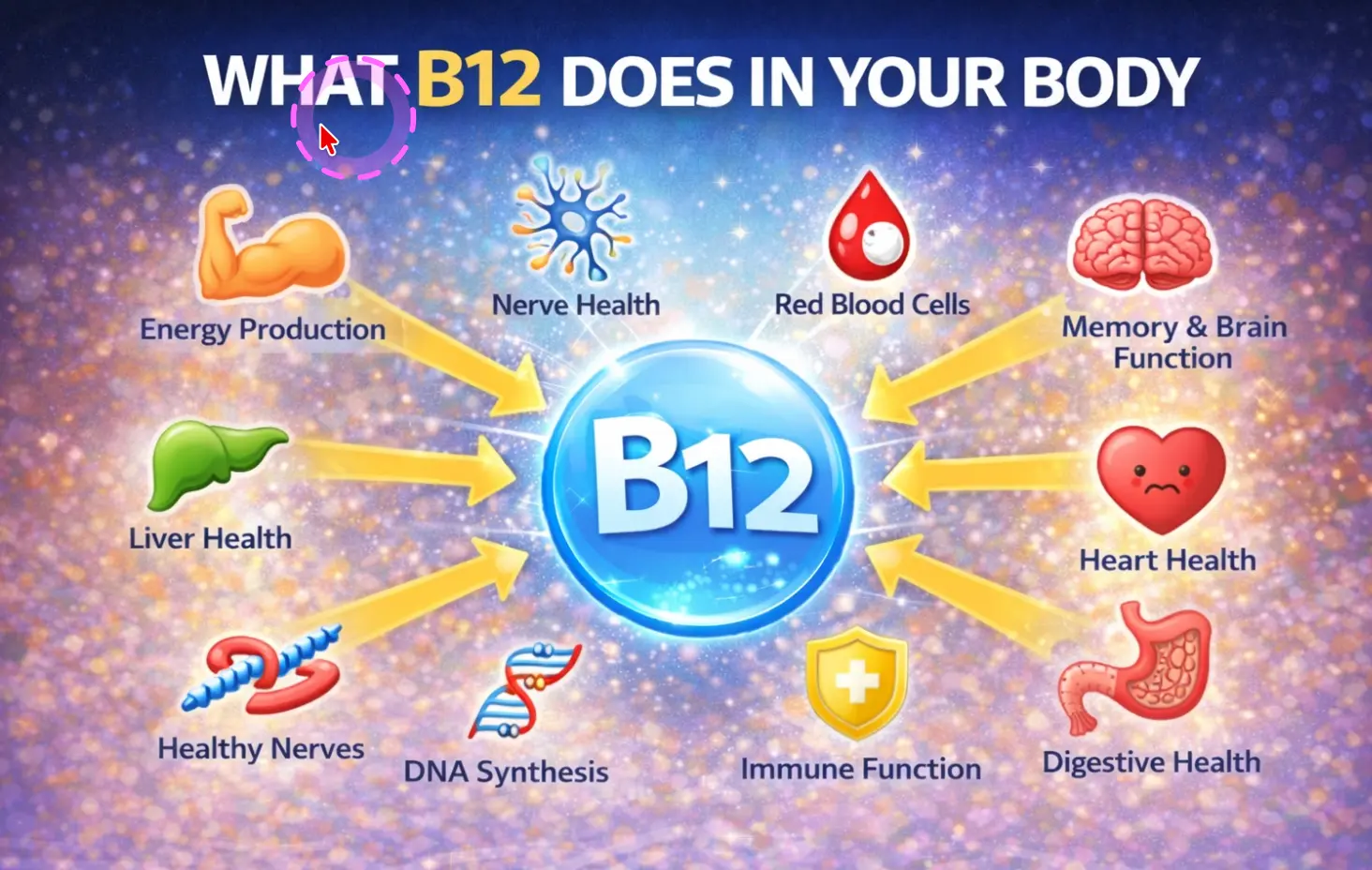
It helps your body make red blood cells.
It helps your brain work well.
It helps your nerves stay strong.
It helps your body make energy.
But here is the problem:
Many people are taking B12… and still not using it well.
That is the real issue.
It is not just about how much B12 you take.
It is about whether your body can absorb it.
What Makes B12 Different From Other Vitamins?
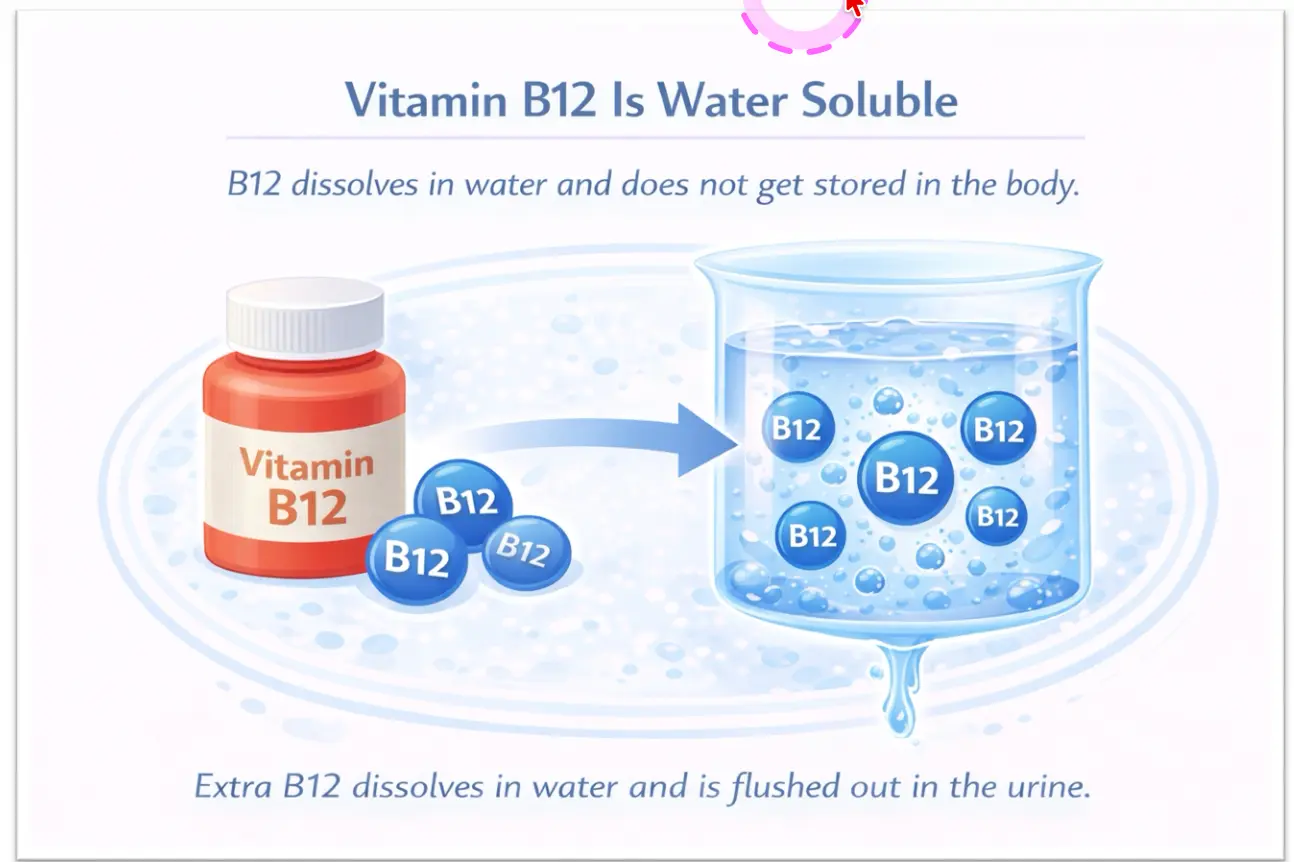
B12 is a water-soluble vitamin.
That means your body does not store large extra amounts of it the same way it stores fat-soluble
vitamins. If you take more than you need, a lot of that extra amount can leave through your
urine. That is one reason a high blood or urine marker does not always tell the full story.
This matters because many people think:
“I have enough B12 on my lab test, so I must be fine.”
Not always.
You may have B12 in your system, but still have trouble using it where it counts.
What Does Vitamin B12 Do in the Body?
B12 helps build red blood cells
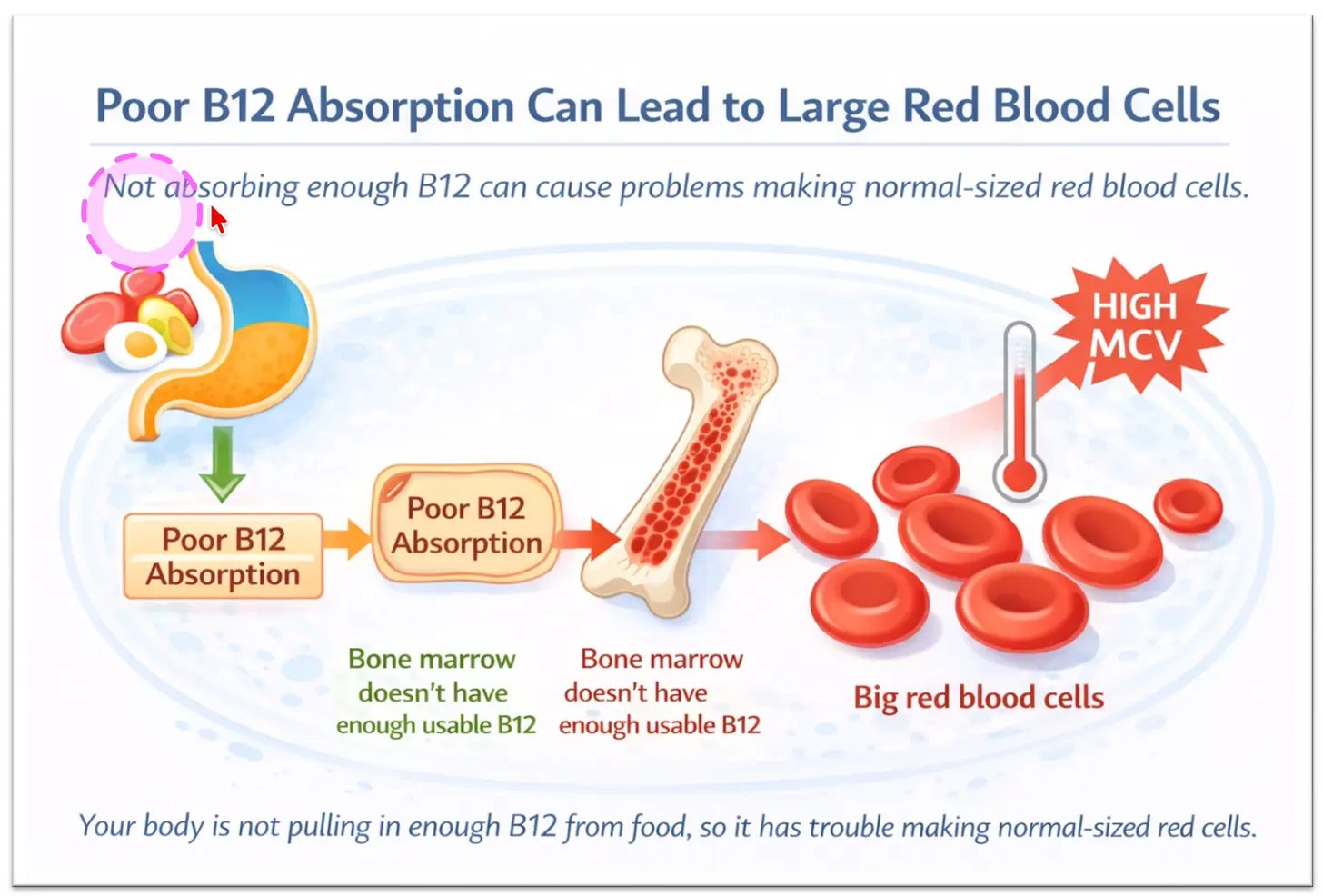
Your body needs B12 to help make healthy red blood cells.
When B12 is low or poorly absorbed, red blood cells can grow too large. That can show up on
lab work as a high MCV.
B12 helps the brain and nerves
B12 helps support the nervous system and the protective covering around nerves.
When this system is under stress, people may deal with:
- brain fog
- low mood
- poor focus
- tingling
- nerve symptoms
B12 helps energy production
If your body cannot use B12 well, you may feel drained, worn out, and not like yourself
B12 helps with methylation and DNA support
B12 plays a key role in normal methylation.
That means it helps your body do important repair and building work every day.
The Hidden Problem: Poor B12 Absorption
Here is where many people get stuck.
They think the answer is only “take more B12.”
Sometimes that helps.
But sometimes the bigger issue is this:
Your stomach and digestive system may not be doing their job.
If your body cannot break B12 loose from food and carry it into the system, you can still
struggle.
How B12 Absorption Really Works
Step 1: B12 comes from food
B12 is mainly found in animal foods, especially meat. In food, B12 is attached to protein.
Step 2: Stomach acid helps release it
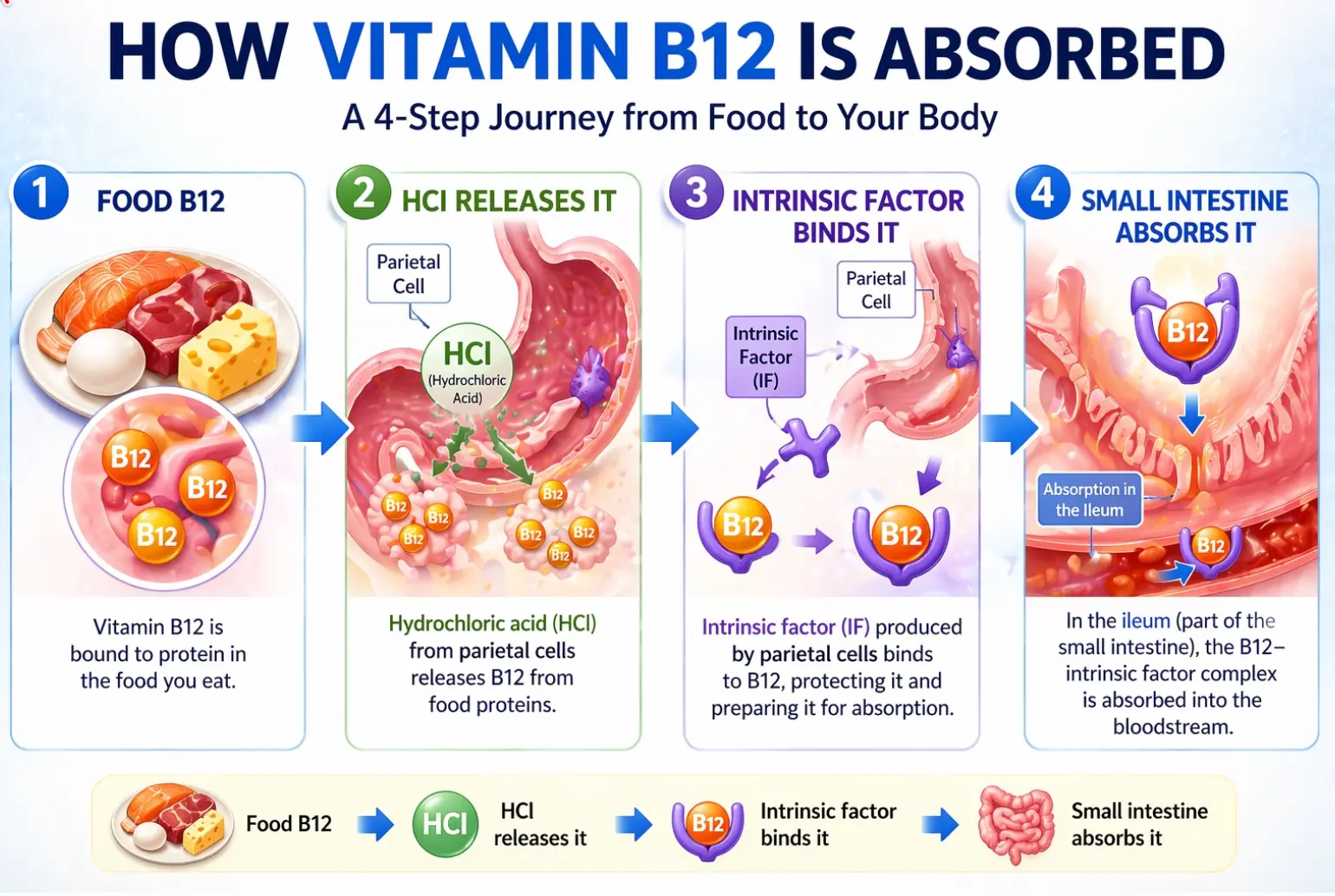
Your stomach needs hydrochloric acid (HCl) to pull B12 away from the protein in food.
If stomach acid is too low, that first step gets weak.
Step 3: Intrinsic factor grabs it
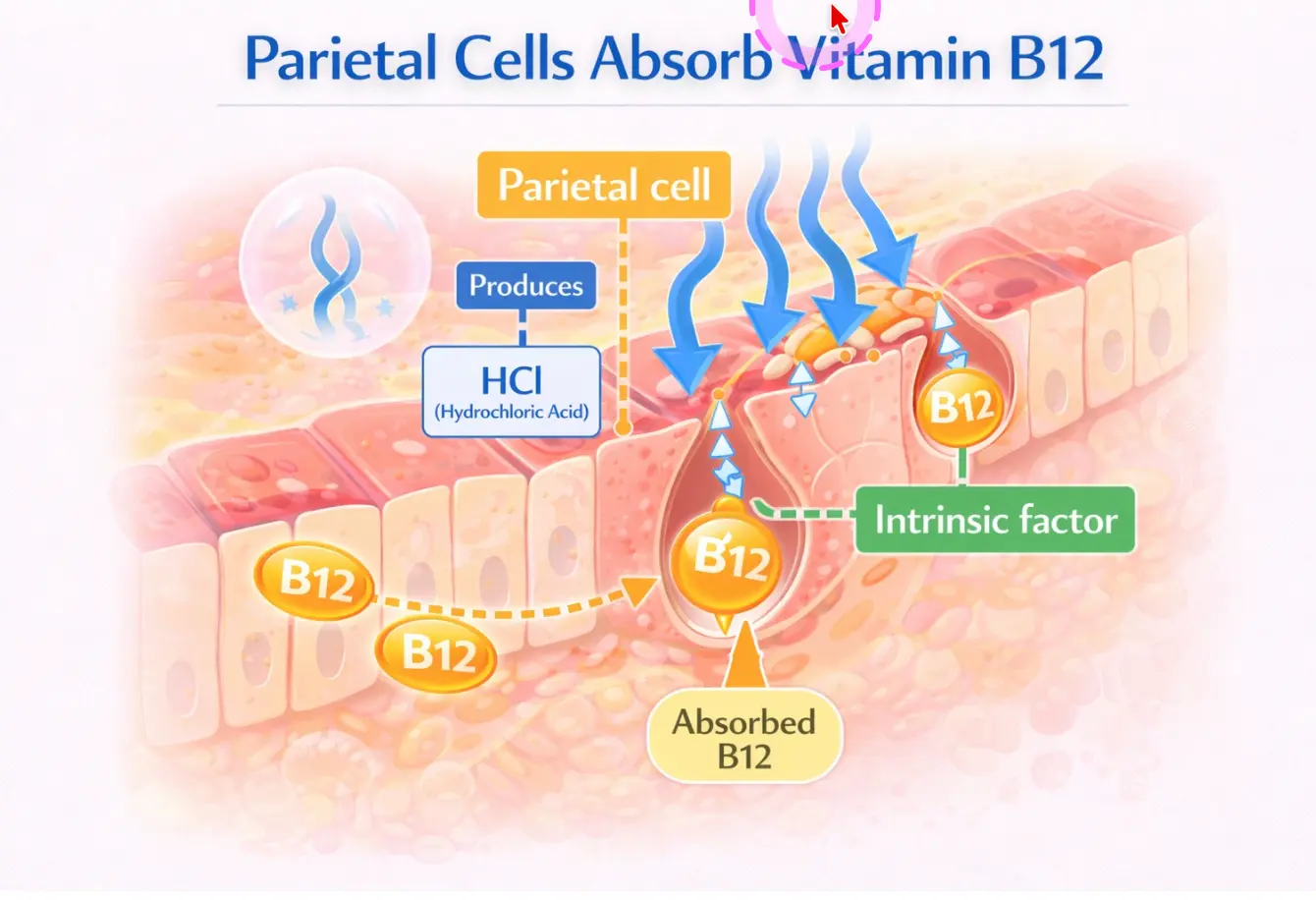
Your stomach also makes something called intrinsic factor.
Think of intrinsic factor like a helper that grabs B12 and gets it ready for absorption.
Step 4: The small intestine absorbs it
After that, the B12-intrinsic factor combo moves into the small intestine, where absorption
happens.
If this process breaks down at any step, B12 levels and function can suffer.
Why Parietal Cells Matter So Much
Inside the stomach are special cells called parietal cells.
These cells make two key things:
• hydrochloric acid (HCl)
• intrinsic factor
That means parietal cells are central to B12 absorption.
If these cells are weak, inflamed, or under attack, B12 absorption can drop fast.
One Big Warning Sign: Anti-Parietal Cell Antibodies
Sometimes the immune system can target the parietal cells.
When that happens, the stomach may produce less HCl and less intrinsic factor.
And when that happens, B12 absorption can go downhill.
This creates a dangerous setup:
• poor stomach function
• poor B12 absorption
• more stress on the brain, nerves, and blood cells
What Lab Markers Can Point to a B12 Problem?
MCV
A high MCV can be a clue that B12 is not being used well.
That means your red blood cells may be too large.
Homocysteine

Homocysteine is another key marker.
When B12 support is weak, homocysteine can rise.
High homocysteine matters because it may point to deeper trouble in methylation and overall
body stress. The source material strongly highlights that keeping this marker in a healthier range
is important.
Homocysteine
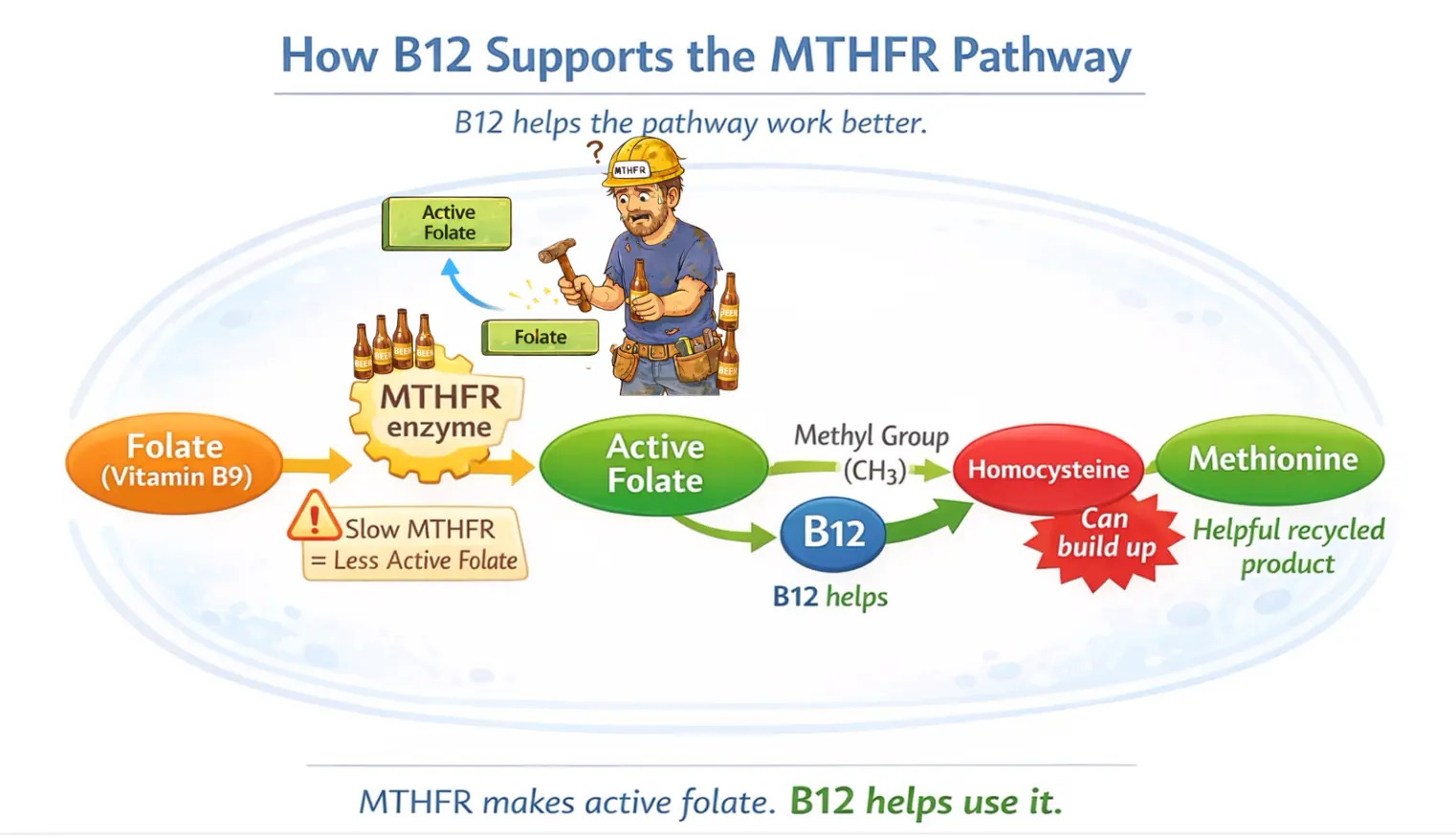
This is where people often get confused.
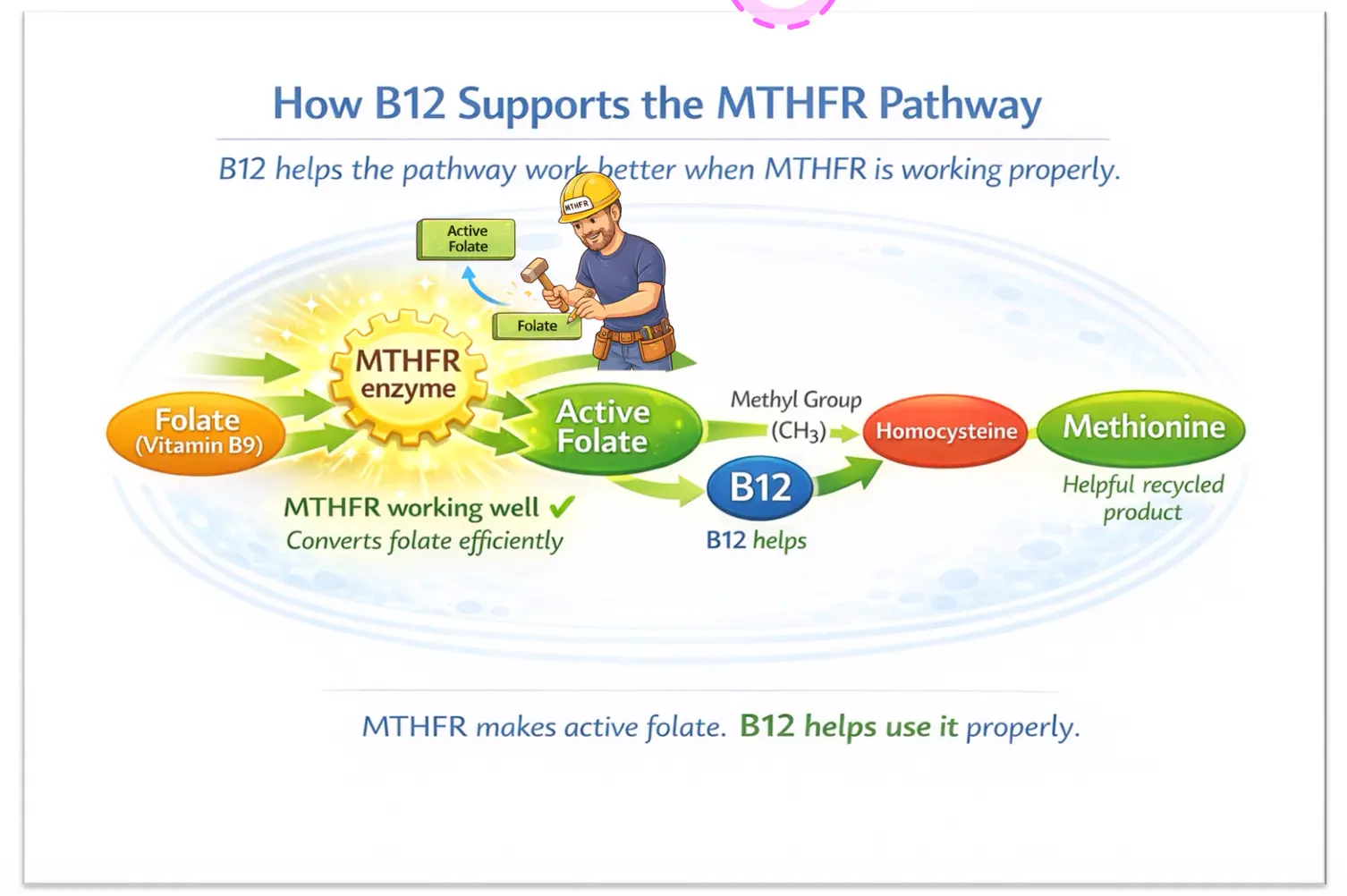
The MTHFR pathway helps the body activate folate.
Then B12 helps the body use that work properly downstream.
So if the pathway is already slow, and B12 is also low or poorly absorbed, the problem gets
worse.
That can lead to:
• poor methylation
• rising homocysteine
• low energy
• more stress on the system
The core message is simple:
If MTHFR is sluggish, B12 still matters.
A lot.
Common Reasons B12 Stays Low
There is usually a reason.
The source material lists several possible causes of poor B12 absorption, including:
• low stomach acid
• stomach inflammation
• low intrinsic factor
• chronic illness
• gastric bypass history
• bacterial overgrowth
• celiac disease
• food sensitivities
• parasitic infections
• pancreatic problems
• liver or gallbladder issues
• MTHFR-related slowdown
• excess alcohol use
This is why guessing is a bad plan.
You do not want to chase symptoms and miss the real cause.
What a Healthy Digestive System Should Look Like
A healthy gut should not keep sending distress signals.
The source material describes a healthy digestive pattern as having:
• regular bowel movements
• no gas
• no bloating
• no diarrhea
• no constant need for digestive aids
If your gut is off, your B12 absorption may be off too.
20 Frequently Asked Questions
Section 1: B12 Basics and Solubility
Far far away, behind the word mountains, far from the countries Vokalia and Consonantia, there live the blind texts. Separated they live in Bookmarksgrove right at the coast
Having high B12 in your blood or urine can be a meaningless marker if your body isn't actually absorbing it into your cells. If you have been damaged by antibiotics or have chronic fatigue, you may have high blood levels because the B12 isn't reaching the "normal channels" it needs to function.
Because B12 is water-soluble, it leaves your system very quickly. If you stop taking a B12 supplement, your levels may return to "normal" on a lab test within just a day or two because your body does not store it long-term.
The main difference is solubility. B12 dissolves in water and is excreted daily, while Vitamin D is fat-soluble and is stored in your body's fat. This means it takes much longer (often months) to lower high Vitamin D levels compared to B12.
In functional medicine, the data-driven sweet spot for homocysteine is between 5 and 6. Levels higher than this indicate significant inflammation and a potential breakdown in your B12 or folate pathways.
High homocysteine acts like "little glass shards" in your bloodstream. It can slice into your endothelium (vessel lining), liver, and pancreas, contributing to chronic conditions like fibromyalgia and heart disease.
The MCV (Mean Corpuscular Volume) measures the size of your red blood cells. If your B12 is low, your bone marrow cannot make normal-sized cells, so they are born "large". A high MCV (Mean Corpuscular Volume) is a major red flag for B12 malabsorption.
While the standard lab range is often 79 to 97, Dr. Hugh looks for a "sweet spot" around 92. Anything higher than 92 suggests your body is struggling to pull in enough B12 from your food.
The journey begins in the stomach, where B12 must be disconnected from the protein in your food (like steak). It then travels to the ileum (the end of the small intestine) to be absorbed into your bloodstream.
Parietal cells are special cells in your stomach lining. They are responsible for producing two critical things: HCl (Hydrochloric Acid) and intrinsic factor, both of which are required to absorb B12.
HCl (Hydrochloric Acid) acts like a chemical "scissor". It breaks the bond between the B12 and the protein in your food, releasing the vitamin so your body can eventually use it.
Intrinsic factor is like a "catcher's mitt" or a protective glove produced in your stomach. It binds to the released B12 to protect it from being destroyed as it moves through your digestive tract toward the small intestine.
This test checks if your immune system is mistakenly attacking your own stomach lining. If these antibodies are present, our stomach won't produce enough intrinsic factor or HCl (Hydrochloric Acid), leading to severe B12 deficiency.
The MTHFR (Methylenetetrahydrofolate reductase) enzyme acts like a "carpenter" that trims folate (Vitamin B9) into its active form. This active folate is what your body actually uses to build DNA and manage inflammation.
Once the MTHFR (Methylenetetrahydrofolate reductase) enzyme makes active folate, you need B12 to actually utilize it properly. If you aren't absorbing B12, the entire cycle slows down, even if you have enough folate.
Methyl groups are like precise "cuts" made by the MTHFR (Methylenetetrahydrofolate reductase) "carpenter" to change the structure of vitamins. Adding these groups allows your body to perform DNA synthesis, which is essential for healthy cell replication.
Yes. By taking active forms of folate (methylfolate) and active B12, you can provide your body with the "pre-cut" vitamins it needs, bypassing the genetic enzyme that isn't working correctly.
There are many causes, including hypochlorhydria (low stomach acid), SIBO (Small Intestinal Bacterial Overgrowth), and Celiac disease. In SIBO (Small Intestinal Bacterial Overgrowth), the excess bacteria in your small intestine can actually "hijack" and eat the B12 before you can absorb it.
Excessive alcohol consumption can interfere with the way your body absorbs and utilizes B12, contributing to a sluggish metabolism and neurological issues.
A healthy gut should have 1 to 3 bowel movements every single day with no gas, no bloating, and no diarrhea. If you have digestive symptoms, it is a sign that you likely have a malabsorption root cause that needs to be addressed.