If you feel sick and you can’t figure out why, this might be the missing piece.
Two common gut germs—Candida (a fungus) and H. pylori (a bacteria)—often team up. When
they’re both there, problems can get much worse.
This is why so many people “try everything” and still don’t get better.
Meet the “Evil Twins” Living in Your Gut
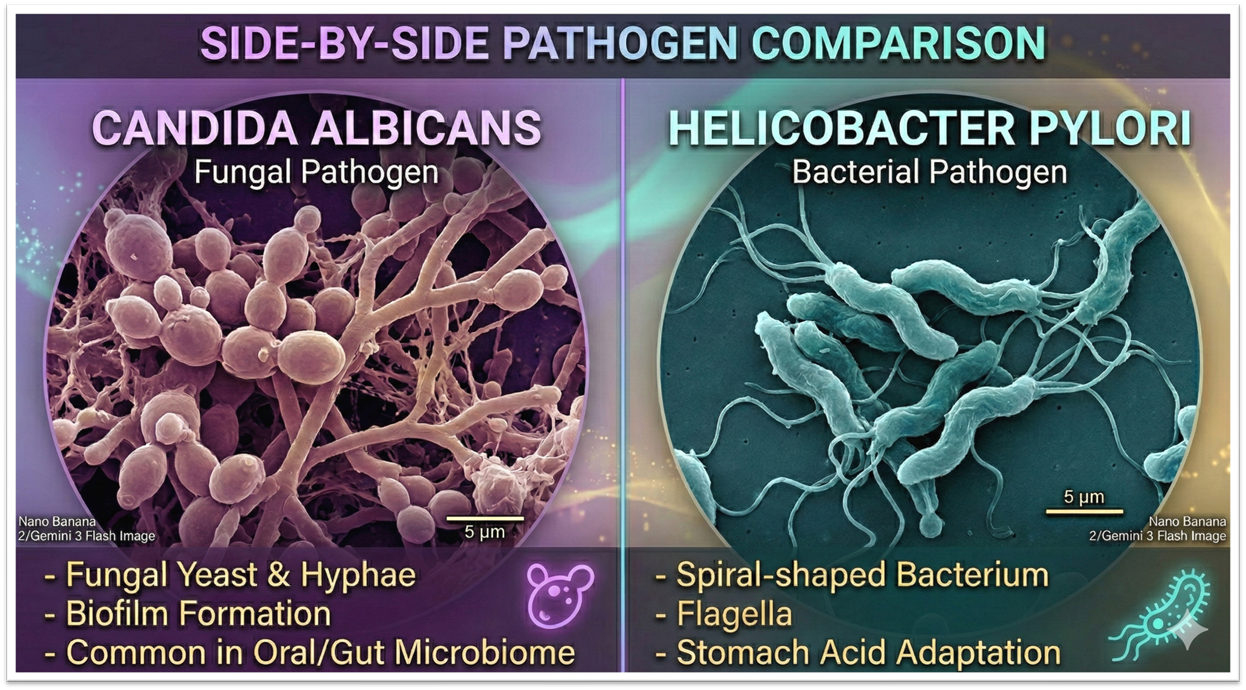
Candida and H. pylori are not the same thing.
• Candida = fungus
• H. pylori = bacteria
But here’s the scary part: they often work together.
If you have both, it can feel like your gut is under attack every day.
Top H. Pylori Symptoms You Should Not Ignore
Common H. Pylori Gut Signs
• Burning stomach
• Bloating
• Frequent burping
• Nausea
• Loss of appetite
• Unplanned weight loss
• Stomach ulcers
• Dark stools
H. Pylori and Autoimmune Trouble
H. pylori has been linked to autoimmune problems like:
• Thyroid issues (like Hashimoto’s)
• Irritable bowel problems
• Crohn’s disease
• Other immune system flare-ups
If you have “mystery symptoms” and no one has checked your gut, this is a big red flag.
8 Big Candida Symptoms (These Are Very Common)
Candida Can Look Like This
1. Frequent UTIs (especially in women)
2. Digestive issues (gas, bloating, belly pain)
3. Constipation AND diarrhea (back and forth)
4. Chronic fatigue (always tired)
5. Brain fog (hard to focus, forgetful, spaced out)
6. Vaginal infections (ongoing vaginosis/yeast)
7. Oral thrush or skin fungus (like foot fungus that won’t go away)
8. Sugar and carb cravings (you feel pulled to sweets)
Why Candida Can Cause Brain Fog
Candida can make a toxin called aldehyde.
Aldehyde acts a lot like alcohol in your body. So you can feel “tipsy” or mentally slow—even if
you never drink.
Now add H. pylori toxins on top of that… and brain fog can get much worse.
The Real Problem: They Work Together
When Candida and H. pylori both live in your gut, they can act like partners in crime.
The “Trojan Horse” Problem
Here’s a wild fact: H. pylori can hide inside Candida.
That makes it harder for your body (and treatments) to find it.
Biofilms: Their Hidden Armor
Both Candida and H. pylori can build biofilms.
Biofilms are like slimy shields that protect them. If you don’t break that shield, it’s harder to
clear them out.
The Stomach Acid Trap (This Is HUGE)
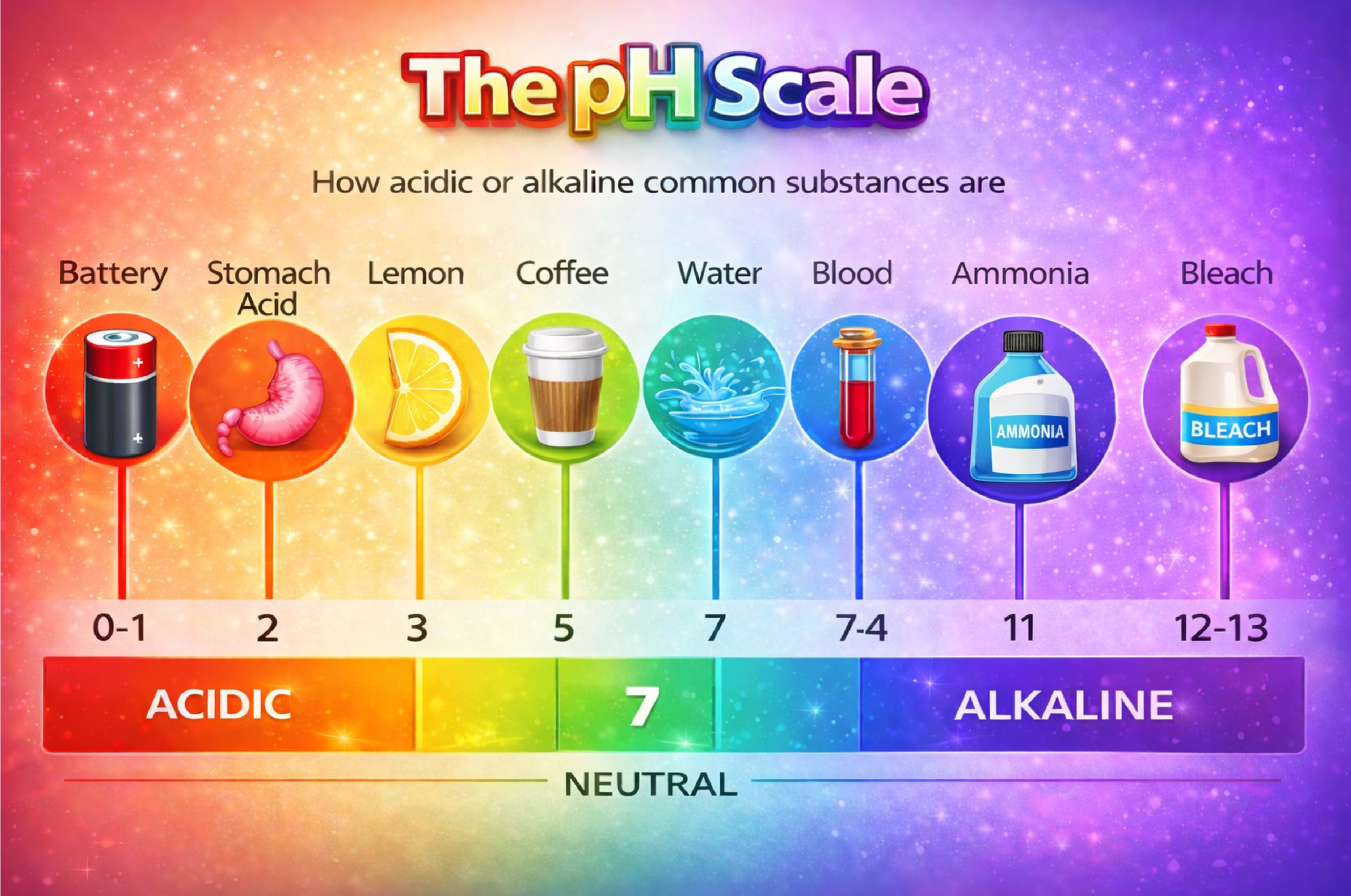
Your stomach acid is supposed to be strong—about pH 2.
That strong acid is your first line of defense.
What H. Pylori Does
H. pylori makes an enzyme called urease.
Urease helps create ammonia, which is very alkaline.
• Stomach acid: pH ~2
• Ammonia: pH ~11
When ammonia goes up, stomach acid gets weaker.
That means your stomach can drift toward pH 4–5, which is not strong enough to protect you.
Why That Matters
When stomach acid gets weak:
• More germs survive
• Candida grows easier
• Digestion gets worse
• Your gallbladder and pancreas don’t “turn on” as well
• Your whole gut can spiral downhill
Leaky Gut: When Your Gut Wall Breaks Down
Your gut lining is thin—about one cell thick—and it needs a healthy mucus layer to protect it.
What a Healthy Gut Looks Like
• Strong mucus layer
• Tight junctions that stay closed
• Good bacteria in balance
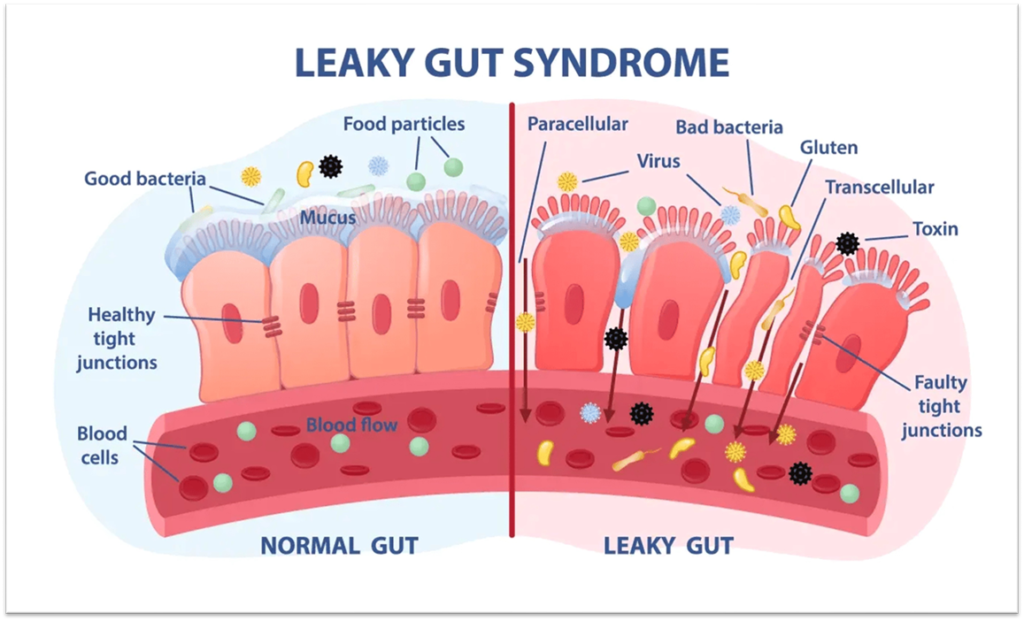
What Happens With Candida + H. Pylori
• The mucus layer breaks down
• Tight junctions open up
• Toxins and food particles can leak into the bloodstream
When your blood sees things it shouldn’t see, your immune system can go on high alert.
That can lead to chronic inflammation, which is a big part of many health problems.
Don’t Guess. Test. Here’s the Simple Test That Finds the Truth
If you want real answers, you need the right test.
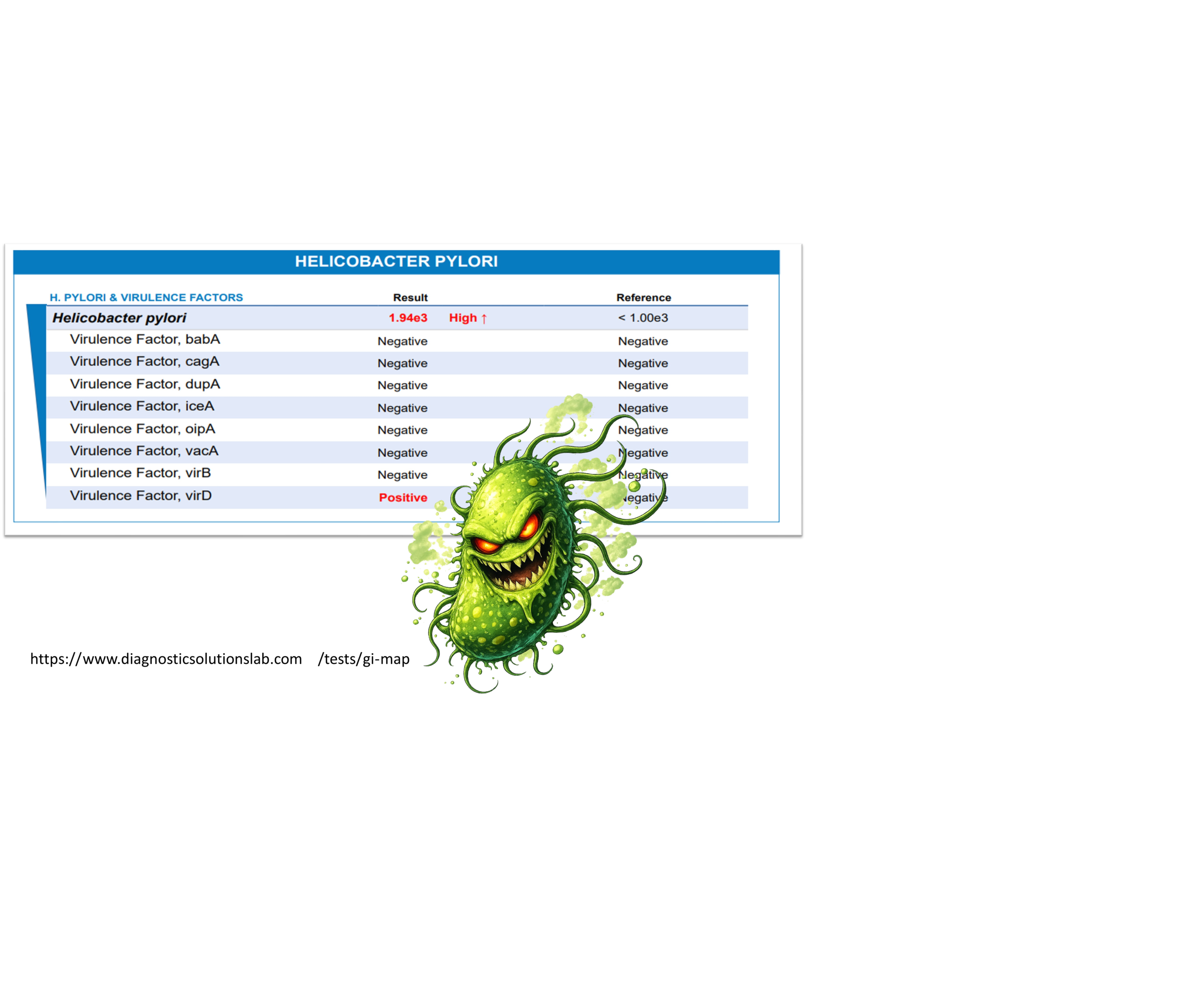
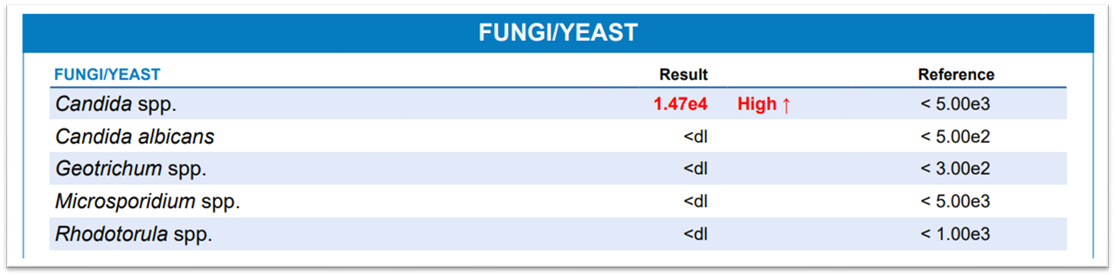
The GI-MAP Stool Test
This is an advanced stool test that can show:
• H. pylori levels
• Candida levels
• Other gut infections
• Key patterns that explain symptoms
It can also check virulence factors for H. pylori—think of those like “extra weapons” that can
make H. pylori more aggressive.
Why Gut Testing Matters So Much
A huge part of your immune system lives in your gut.
If your gut is not healthy, it’s much harder for your whole body to feel healthy.
The Gut Defense Trio: A Simple 3-Step Gut Healing Plan
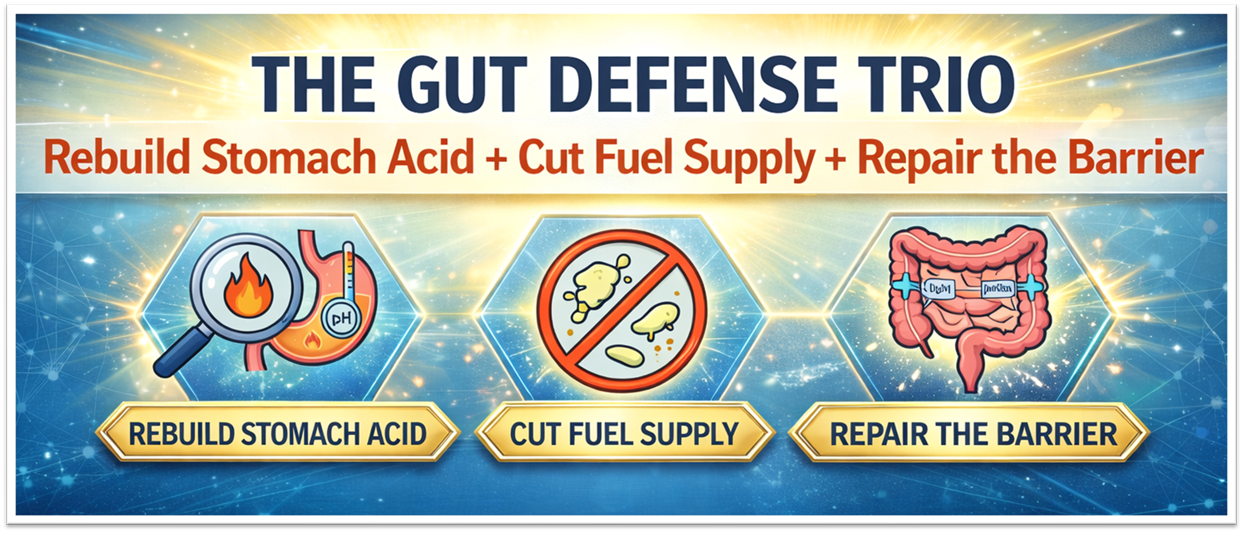
This is a broad, basic plan that helps many people get started.
Step 1: Rebuild Stomach Acid
Strong stomach acid helps:
• Digestion
• Killing germs
• Reducing H. pylori growth
Step 2: Cut Off the Fuel Supply
Candida loves sugar.
So the goal is to reduce the foods that feed overgrowth.
A common short-term strategy is a “carnivore-ish” diet (meat + simple fruit) for 6–8 weeks to
reduce:
• Sugar
• Processed foods
• Gluten
• Dairy (for many people)
Step 3: Repair the Gut Barrier
One helpful support is butyrate, a fuel source for gut lining cells.
It can support gut healing when your gut is run down.
The Next Step If You Want Real Progress
If you’ve been stuck with symptoms like:
• bloating
• brain fog
• fatigue
• sugar cravings
• chronic digestive problems
• autoimmune-type issues
…then it’s time to stop guessing.
Your Best Move
1. Get the right testing (like the GI-MAP)
2. Follow a step-by-step plan based on your results
Because when you find the root cause, you can finally build a real path forward.
Final Reminder
You were made to heal.
And when you find the real problem, you can stop chasing random fixes and start getting real
wins.
Where there is help, there is hope.
The "Evil Twins" of Gut Health: FAQ
Yes, H. pylori (a bacteria) and Candida
(a fungus) often work together as "evil twins" in the gut. When both are present, they work in
unison to cause health problems that are often 100-fold worse than having just one, making them significantly harder to eliminate without addressing both simultaneously.
Common symptoms of H. pylori include a burning sensation in the stomach, bloating, frequent burping, and nausea. More severe indicators can include loss of appetite, unintentional weight loss, stomach ulcers, and dark stools.
Research and clinical observation suggest a strong link between H. pylori and various autoimmune conditions.
Specifically, this bacterial infection has been connected to Sjogren's disease, psoriatic disease, Hashimoto’s thyroiditis, and irritable bowel diseases like Crohn’s.
Frequent UTIs, especially in women, are often a symptom of Candida overgrowth. Because fungal and bacterial issues frequently go hand-in-hand, recurring bladder discomfort and painful urination can be a sign that these "evil twins" are disrupting your system.
If you are suffering from "mystery diseases" or chronic symptoms like alternating constipation and diarrhea, the GI Map test is an advanced stool test that can "connect the dots". Unlike standard tests, it identifies hidden infections of H. pylori and Candida that are often the overlooked root cause of why a patient isn't getting better.
These "evil twins" work in unison, making the environment in your body more hospitable for one another. Because they are two different species—one a fungus and one a bacteria—they require distinct treatment approaches. If you only treat one, the other often remains, causing the problems to be even more of a bigger problem to handle.
Many people suffer from "mystery diseases" where they simply aren't getting better despite standard treatments. These can manifest as persistent gas, abdominal pain, swelling, and a frustrating alternation between constipation and diarrhea. If you are experiencing these patterns, an underlying infection of H. pylori and Candida may be the root cause.
Yes, H. pylori is specifically associated with unintentional weight loss and a loss of appetite. When combined with the digestive havoc and swelling caused by Candida overgrowth, these infections can significantly disrupt your health and prevent you from recovering as you were designed to do.