Current data shows that 76% of Americans have at least one chronic illness, and 51% are managing two or more. Most patients entering telemedicine care have already consulted multiple providers, completed endless rounds of conventional testing, and tried high-end therapies like IV stem cells or PRP (Platelet-Rich Plasma) only to experience brief temporary relief
followed by a severe crash.
Healing complex chronic illness—whether recovering from fluoroquinolone antibiotic toxicity (“floxed”), chronic fatigue, autoimmune reactivity, or severe gut dysbiosis—is not about throwing random supplements at isolated lab numbers. It requires a systematic, layered approach that prioritizes foundational human physiology before advancing to targeted therapeutics.
The following 7-Layer Functional Recovery Roadmap outlines the exact clinical hierarchy required to restore cellular energy
and achieve systemic health.
The 7-Layer Hierarchy of Functional Healing
[Layer 7: Core Nutrients & Micronutrient Catalysts]
[Layer 6: Functional Gut Restoration & Gut-Brain Axis]
[Layer 5: Mitochondrial Electron Flow & ATP Generation]
[Layer 4: Cell & Mitochondrial Membrane Stabilization]
[Layer 3: Home Physical Medicine, Vagal Tone & Sleep]
[Layer 2: Hypoallergenic Fuel, Structural Protein & Calories]
[Layer 1: The Functional Trio — Perfusion, Blood Sugar & Oxygenation]
Layer 1: The Functional Trio (Perfusion, Fuel Delivery, and Oxygenation)
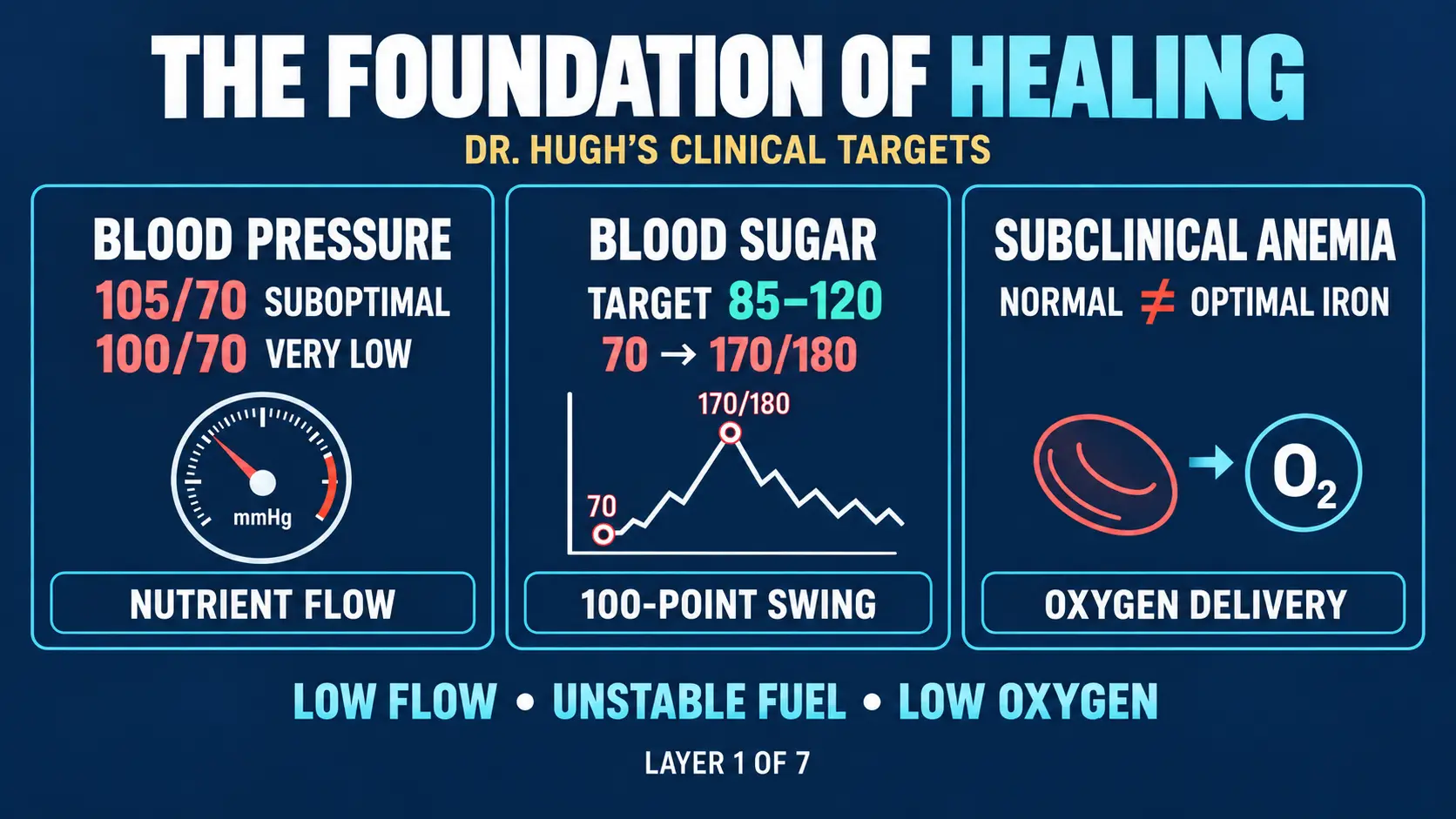
If the three baseline physiological parameters below are outside their functional target ranges, advanced protocols will fail.
These represent the lowest-hanging clinical fruit that standard medical models routinely overlook.
Layer 1: The Functional Trio (Perfusion, Fuel Delivery, and Oxygenation)
- Conventional Perception: 100/65 mmHg or 105/70 mmHg is celebrated as “great cardiovascular health.”
- Functional Target: ~120/80 mmHg.
- Mechanism: Blood pressure functions like hydrostatic pressure in an irrigation system. Without adequate systemic
pressure, capillary beds cannot push nutrients, oxygen, and electrolytes across vascular walls into peripheral tissues and
the central nervous system. - Clinical Presentation: Low perfusion starves tissues, triggering brain fog, lightheadedness, chronic fatigue, dysautonomia,
thinning hair, peripheral neuropathy (pins, needles, loss of vibration sensation), and sluggish gut motility (constipation).
2. Glycemic Volatility (Blood Sugar Swings)
- Conventional Lab Range: Fasting glucose up to 99 mg/dL; postprandial under 140 mg/dL.
- Functional Target: 85 to 120 mg/dL consistently, with or without food.
- Mechanism: Dysglycemia is present in roughly 80% of complex chronic illness cases. Wild swings—such as waking with a
fasting glucose of 70 mg/dL and spiking to 170 mg/dL after a meal—generate intense oxidative stress. This 100-point
glycemic excursion damages cell membranes, induces DNA damage, and blunts ATP (Adenosine Triphosphate) synthesis. - Monitoring: Spot fasting checks miss postprandial spikes and reactive hypoglycemia. A CGM (Continuous Glucose
Monitor) captures up to 7,000 continuous data points per month to detect volatility.
3. Subclinical Anemia & Impaired Oxygen Delivery
- Conventional Perception: Hemoglobin and hematocrit within wide lab ranges, while serum ferritin sits low at 15–20 ng/mL.
- Functional Target: Robust iron storage (ferritin > 50–70 ng/mL depending on inflammatory status) and optimal red blood
cell indices. - Mechanism: Iron is the core binding atom in hemoglobin. Subclinical iron deficiency without overt anemia starves the
mitochondrial electron transport chain of oxygen, cutting off aerobic ATP production at the cellular level.
Layer 2: Food Quality, Structural Protein, and Caloric Sufficiency

Chronic inflammation and neuroinflammation directly impair appetite centers in the hypothalamus. Many chronically ill individuals unintentionally undereat, creating chronic energy deficits and reactive hypoglycemia.
Why Blood Sugar Problems Damage Mitochondria
Focus Area | Functional Clinical Strategy | Clinical Mechanism |
|---|---|---|
Antigen Elimination | Carnivore-ish elimination (ruminant meat and | Completely eliminates common dietary triggers: |
Neutral Carbohydrates | White rice, certified gluten-free oatmeal, | Clean, non-inflammatory glucose sources for |
Protein Quantity | 1 gram of protein per pound of ideal body | Amino acids are the literal structural building blocks |
Caloric Baseline | Consistent caloric floor (~2,000 kcal baseline, | Prevents catabolism and stabilizes blood sugar to protect mitochondrial output. |
Layer 3: Home Physical Medicine and Polytherapy

A multi-therapy approach delivers multiple gentle, synergistic home therapies simultaneously rather than relying on isolated
interventions.
- Far-Infrared Sauna Blankets: Far-infrared light penetrates deep tissue layers, stimulating heat-shock proteins, improving microcirculation, and re-energizing mitochondria.
- Grounding Sheets (Earthing): Chronic inflammation depletes cellular electron stores. Grounding transfers free electrons from the earth into the body, neutralizing reactive oxygen species.
- Chi Machine (Passive Spinal Motion): Gentle oscillation moves the lymphatic system, supports venous return, and engages parasympathetic tone without physical exertion.
- Vagus Nerve Stimulation & ANS (Autonomic Nervous System) Retraining: Neuroinflammation impairs vagal signaling. Targeted breathing exercises, cold exposure, and physical vagal therapies restore gut motility, stimulate digestive secretions, and modulate systemic immune activation.
- Circadian Sleep Architecture: Deep cellular repair occurs primarily during slow-wave and REM sleep. Targeted sleep protocols (including darkness, thermal regulation, and neuro-supportive nutrients) must be locked in.
Layer 4: Cell and Mitochondrial Membrane Stabilization

The human body contains roughly 30 trillion cells, and each cell houses between 500 and 2,000 mitochondria. Every organelle and mitochondrion is bound by a lipid bilayer composed predominantly of phospholipids and essential fatty acids.
Why Membrane Repair Precedes Energy Stimulation
Stimulating damaged mitochondria with cofactors is like revving an engine with cracked cylinder heads. If the inner and outer mitochondrial membranes are oxidized or leaky:
- The electrochemical proton gradient across the inner membrane collapses.
- Cells cannot clear waste or transport nutrients efficiently.
- Forcing ATP production causes further free radical generation and cellular crashes.
Key Membrane Nutrients
- Phosphatidylcholine (PC): Pure PC acts as the raw physical substrate to reconstruct broken lipid bilayers.
- Balanced Fatty Acids: Unadulterated omega-3, -6, and -9 formulations restore optimal membrane fluidity.
- High-Potency EPA & DHA: Downregulates inflammatory eicosanoids and supports cellular flexibility.
Layer 5: Mitochondrial Electron Flow and ATP Production

Once the mitochondrial lipid membrane is stabilized (Layer 4), targeted nutrients can safely restore the electron transport chain
(ETC) to produce cellular energy.
- The Clinical Goal: Maximize ATP generation across Complexes I through IV and ATP Synthase.
- Clinical Indication: Chronic fatigue, brain fog, post-exertional malaise, and chemical sensitivities reflect severe cellular
bioenergetic failure. - Targeted Catalysts:
- CoQ10 (Ubiquinol): Transports electrons between Complexes I/II and Complex III.
- PQQ (Pyrroloquinoline Quinone): Stimulates mitochondrial biogenesis (the creation of new mitochondria).
- Targeted Antioxidants (Glutathione, Alpha-Lipoic Acid): Buffer the reactive oxygen species naturally produced
during ATP generation.
Layer 6: Functional Gut Restoration and the Gut-Brain Axis

Roughly 95% of chronically ill patients present with gut dysfunction. However, treating the gut in isolation without addressing Layer 1 (perfusion), Layer 2 (food antigens), and Layer 3 (vagal tone) often leads to treatment failure.
Diagnostic Gold Standard: The GI-MAP (DNA-PCR Stool Analysis)
A comprehensive DNA-PCR stool analysis evaluates the microbiome with high precision:
- Pancreatic Elastase-1: Low levels indicate pancreatic insufficiency. This frequently stems from neuroinflammation and
blunted vagus nerve output, starving the small intestine of digestive enzymes. - Occult Infections: Identifies Helicobacter pylori (and its virulence factors), parasitic protozoa, and fungal/Candida
overgrowth. - Dysbiosis & SIBO Indicators: Detects opportunistic pathogens and commensal bacterial depletion.
- Intestinal Health Markers: Assesses Calprotectin (gut inflammation), Secretory IgA (mucosal immunity), and Zonulin
(leaky gut).
Systemic Gut Repair Steps
- Phase 1: Support Digestive Fire: Restore stomach acid, pancreatic enzymes, and bile flow before using antimicrobials.
- Phase 2: Targeted Microbiome Rebalancing: Eradicate opportunistic pathogens systematically without stripping the gut
lining. - Phase 3: Epithelial Healing: Utilize short-chain fatty acids (SCFAs) like sodium butyrate to rebuild enterocytes and tight
junctions.
Layer 7: Core Systemic Nutrients and Catalysts

The final layer supplies the high-demand micronutrients required for daily enzymatic function and cellular communication.
Micronutrient | Clinical Significance | Optimal Functional Target |
|---|---|---|
Magnesium (Multi-Form) | Co-factor for over 400 enzymatic reactions, muscle | RBC (Red Blood Cell) Magnesium > |
Vitamin D3 | Functions as a neuro-steroid hormone regulating hundreds | 70–100 ng/mL |
Vitamins K2 & E | Fat-soluble antioxidants that protect lipid membranes from peroxidation and guide calcium into bone rather than vascular tissue. | Synergistic with Vitamin D3 |
Environmental Wildcards (When to Investigate Mold and Mycotoxins): If a patient diligently executes Layers 1 through 3 for 4 to 6
weeks with zero clinical shifts, environmental biotoxins must be ruled out immediately. Mycotoxins act as mitochondrial poisons,
paralyze the vagus nerve, and lock the immune system into chronic cell-danger response (CDR).
Frequently Asked Questions (FAQ)
While 105/70 mmHg is considered acceptable in conventional cardiology to prevent long-term arterial stress, it often causes inadequate tissue perfusion in a chronically ill patient. Without sufficient hydrostatic pressure, blood cannot push oxygen, glucose, and nutrients into the capillary beds of the brain, extremities, and gut lining, worsening symptoms like brain fog, neuropathy, and constipation.
Yes. Rapid glucose excursions—such as dropping to 70 mg/dL fasting and spiking to 170 mg/dL after meals—generate high
levels of oxidative stress and advanced glycation end-products (AGEs). This oxidative damage directly injures the mitochondrial
membrane, impairs ATP synthesis, and damages cellular DNA.
Regenerative therapies like stem cells and PRP introduce growth factors and signaling molecules, but they cannot overcome an unstable cellular environment. If the patient has low tissue perfusion, wild glycemic swings, oxidized cell membranes, or subclinical anemia, the newly introduced cells lack the oxygen, fuel, and stable membranes required to survive and function long-term.
The vagus nerve is the primary conduit of the parasympathetic nervous system, responsible for the "rest and digest" response.
When chronic neuroinflammation impairs vagus nerve signaling, the brainstem fails to signal the pancreas to release digestive
enzymes (pancreatic elastase) or the gallbladder to release bile, leading to malabsorption, bloating, and secondary bacterial overgrowth.