Fluoroquinolone Toxicity: What Floxed Patients Need to Know About Leaky Brain, Cipro Side Effects, Peripheral Neuropathy, and Fluoroquinolone Recovery
If you took Cipro, Levaquin, or another fluoroquinolone antibiotic and now feel like your body changed overnight, this article is for you.
Maybe you now deal with:
• brain fog
• anxiety
• panic attacks
• heart racing
• blurred vision
• nerve pain
• dysautonomia
• burning feet or hands
• deep fatigue
You may feel scared.
You may feel confused.
You may have been told everything looks “normal.”
But many people who are floxed say the same thing: something is clearly wrong.
This article breaks the topic down in simple language. It explains how fluoroquinolone toxicity may affect the brain, nerves, gut, and energy system, and why recovery must start with understanding the damage pattern.
Fluoroquinolone Toxicity Can Affect More Than Just the Infection
Most people think an antibiotic only fights bacteria.
But the webinar explains that fluoroquinolone toxicity can do much more than that. These drugs may move deep into the body and affect tissues that are hard to protect, especially the brain, nerves, and mitochondria.
This helps explain why symptoms may feel so widespread.
A person may start with one complaint, then suddenly have many:
• nerve pain
• brain fog
• sleep trouble
• panic
• balance problems
• gut symptoms
• muscle weakness
• vision changes
That is why this problem can feel so overwhelming. It may not stay in one part of the body.
Fluoroquinolone Toxicity May Penetrate Fat-Rich Tissue
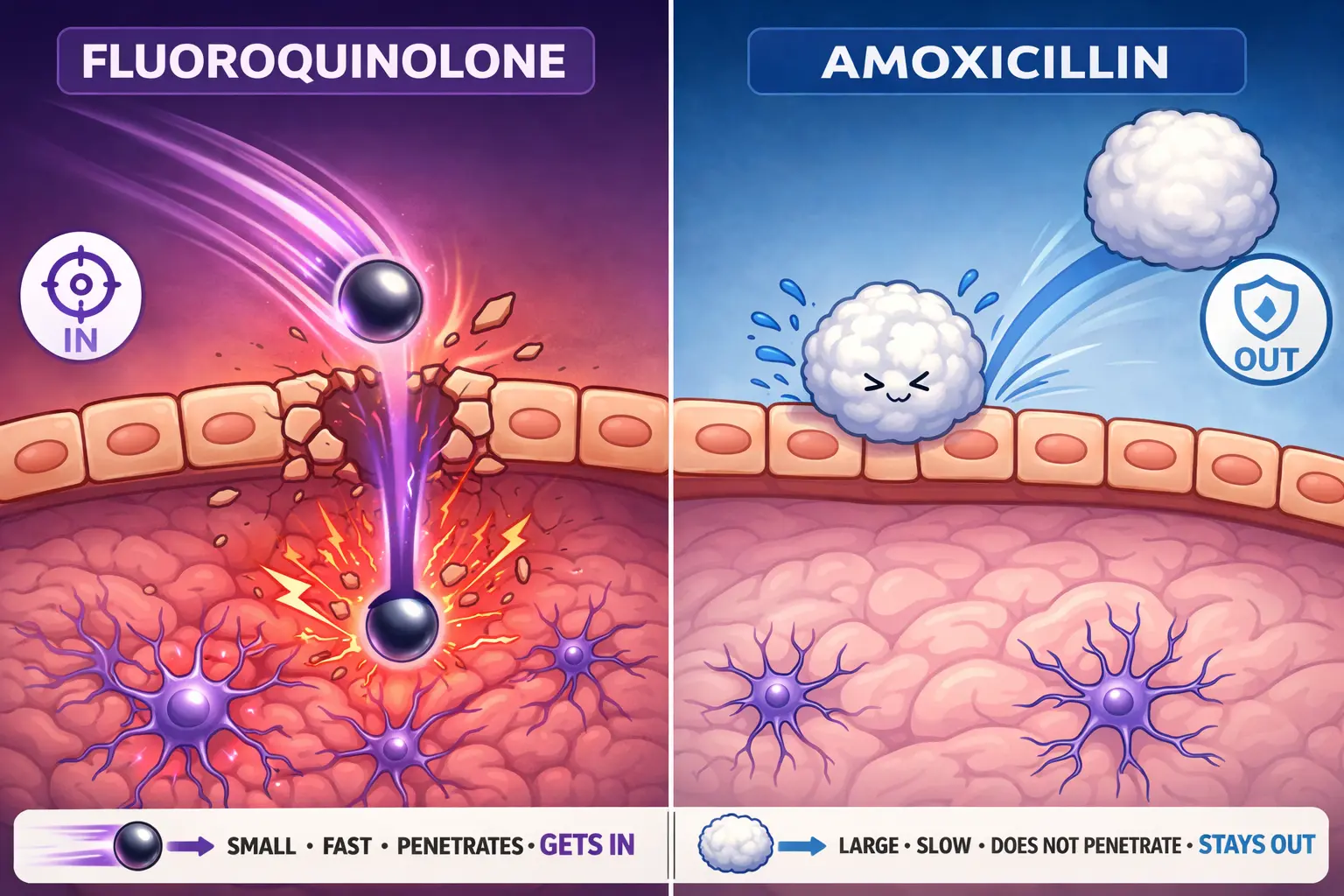
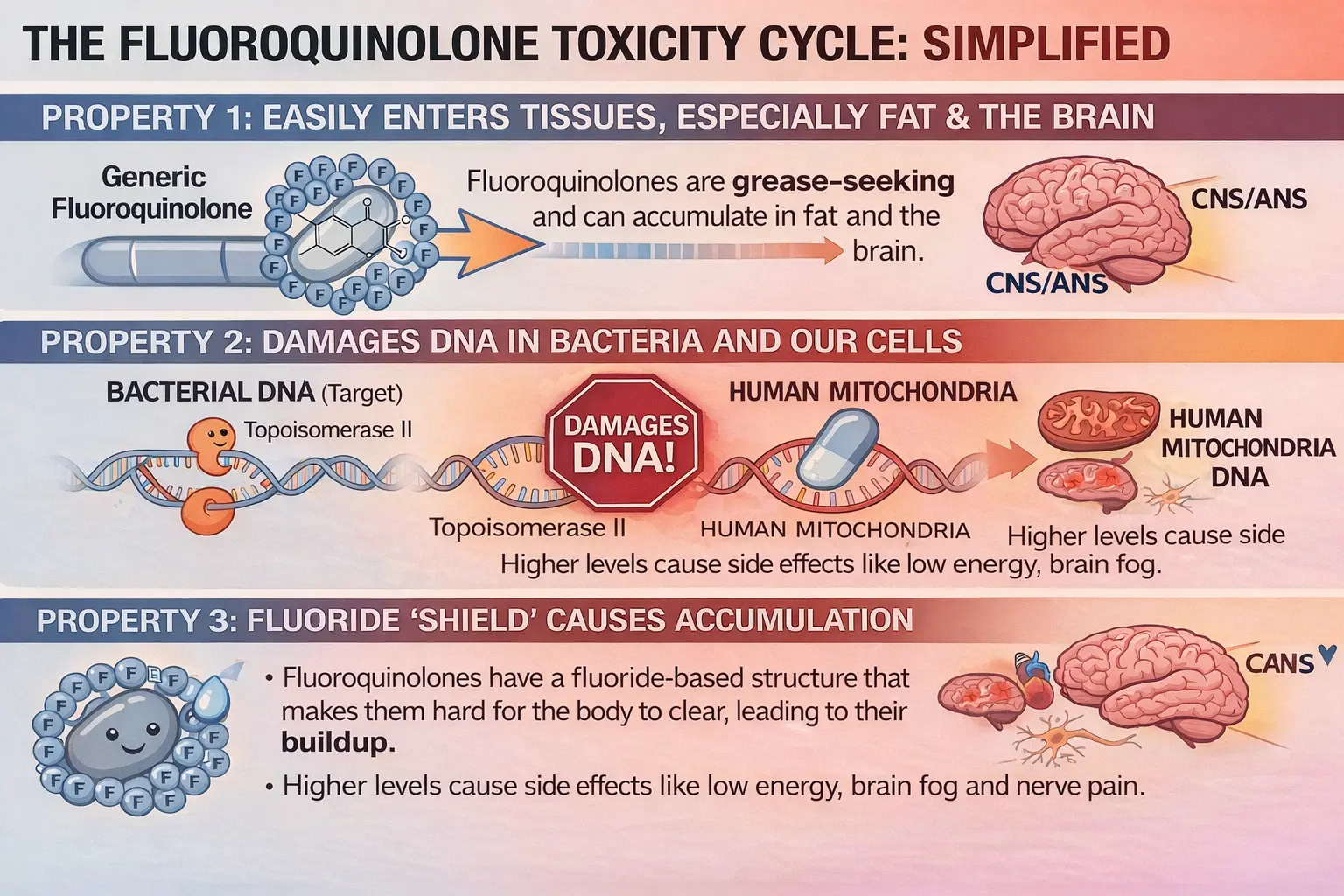
One of the main ideas in the webinar is that these drugs are fat-loving. That means they can move into fat-rich tissue more easily than water-loving drugs.
Why does that matter?
Because many important parts of the body contain a lot of fat, including:
• the brain
• the spinal cord
• the nerves
• the cell membrane
• the mitochondrial membrane
So when a drug moves easily into fat, it may also move into the tissues that control thinking, mood, energy, sensation, and nerve signaling.
That is a big reason why the symptoms may feel neurological.
Fluoroquinolone Toxicity May Damage Mitochondria
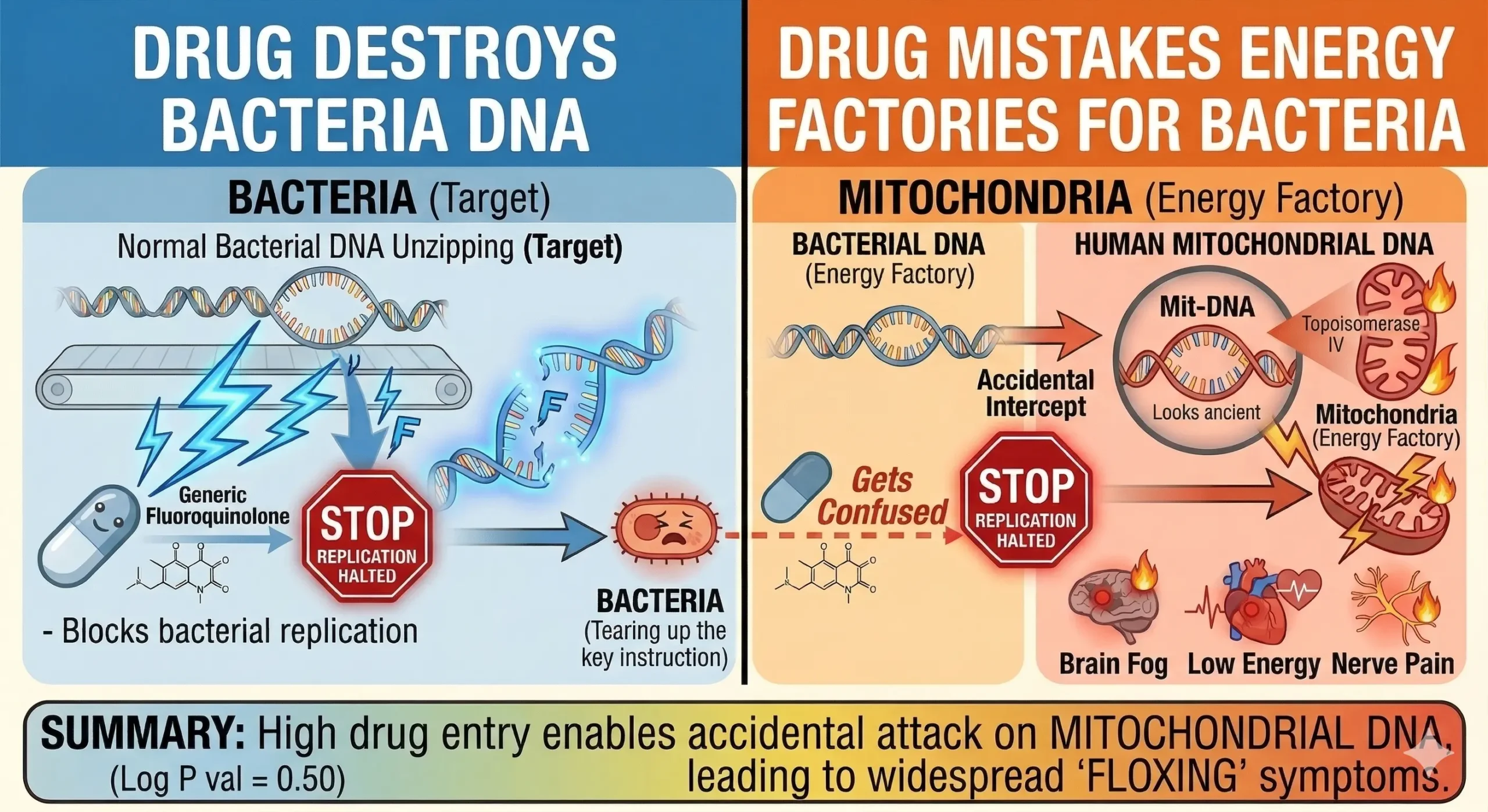
The webinar also explains that these drugs target bacterial DNA. That is part of how they kill bacteria.
But there is a problem.
Your mitochondria also have DNA.
Mitochondria are the parts of your cells that help make energy. They are like little power plants inside the body. When they are stressed or damaged, the whole system can start to struggle.
This may help explain symptoms like:
• crushing fatigue
• poor stamina
• muscle weakness
• slow healing
• brain fatigue
• nerve irritation
When the body cannot make energy well, it gets harder to feel normal.
Fluoroquinolone Toxicity Has Unique Chemistry
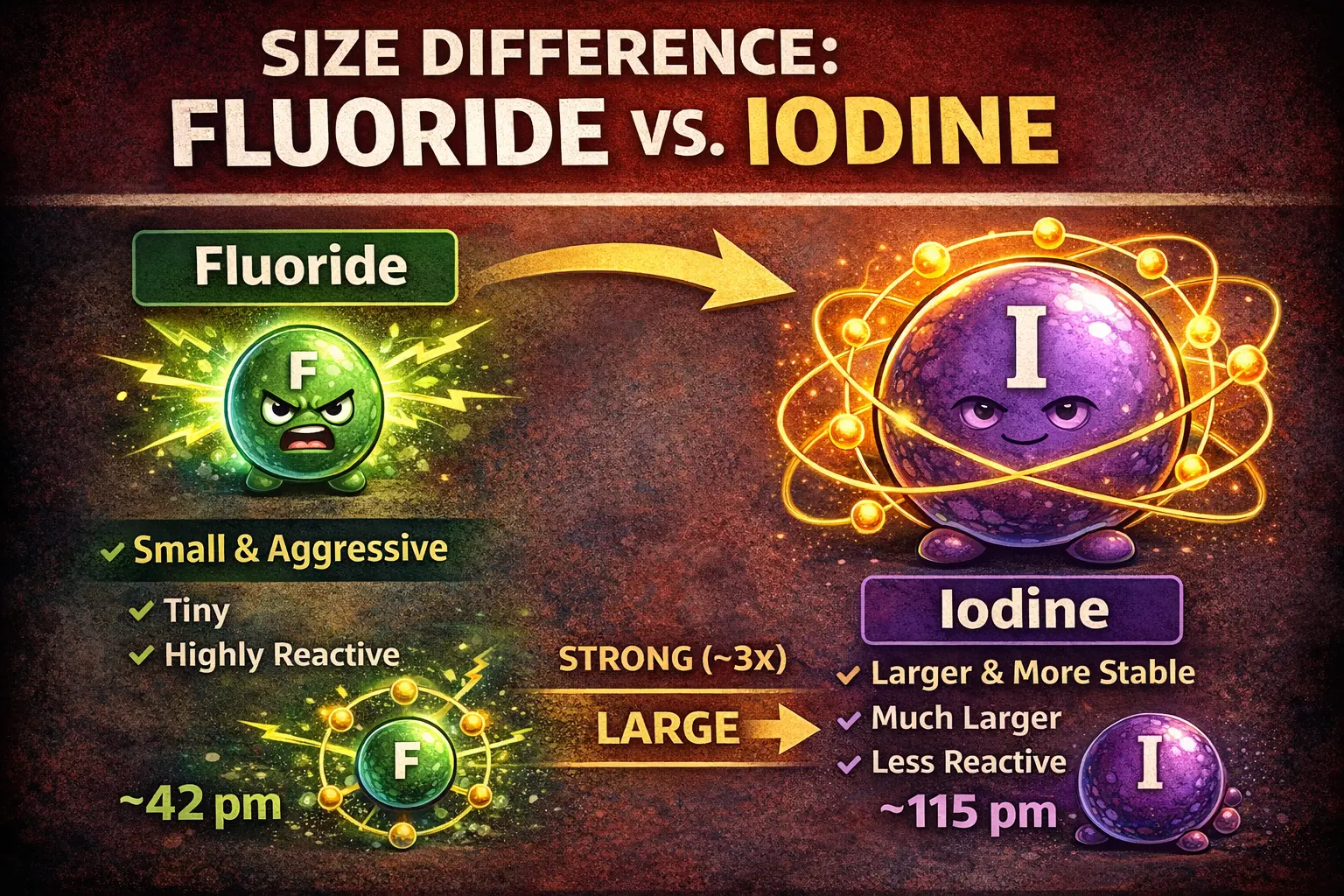
Another key point in the webinar is that fluoroquinolones contain fluorine. The speaker describes this as one reason the drug behaves differently from many other antibiotics.
In simple terms, fluorine helps make the drug more aggressive in how it moves into tissue. The webinar links this chemistry to the higher risk of deep tissue penetration, brain effects, and neurological side effects.
That does not mean every person will react the same way. But it does help explain why some people get hit hard.

Floxed Patients Often Feel Like Their Symptoms Make No Sense
Many floxed patients say the same thing:
“My symptoms are everywhere.”
“My body feels overstimulated.”
“My brain does not feel right.”
“My doctors cannot explain it.”
The webinar explains that this pattern may be tied to neuroinflammation and damage to the body’s protective barriers.
This matters because when the brain becomes inflamed, symptoms can feel intense, random, and frightening.
Floxed Patients May Develop Neuroinflammation
Neuroinflammation means inflammation in the brain.
The webinar connects fluoroquinolone injury to neuroinflammation and says this may help explain why people develop symptoms such as:
• brain fog
• anxiety
• panic attacks
• blurred vision
• weird thoughts
• poor sleep
• dizziness
• nervous system overload
When the brain is inflamed, a person may feel like they are always “on edge.” The body may feel unsafe even when nothing dangerous is happening.
That can make people think they are losing their mind, when in fact the brain may be reacting to a real biological stress.
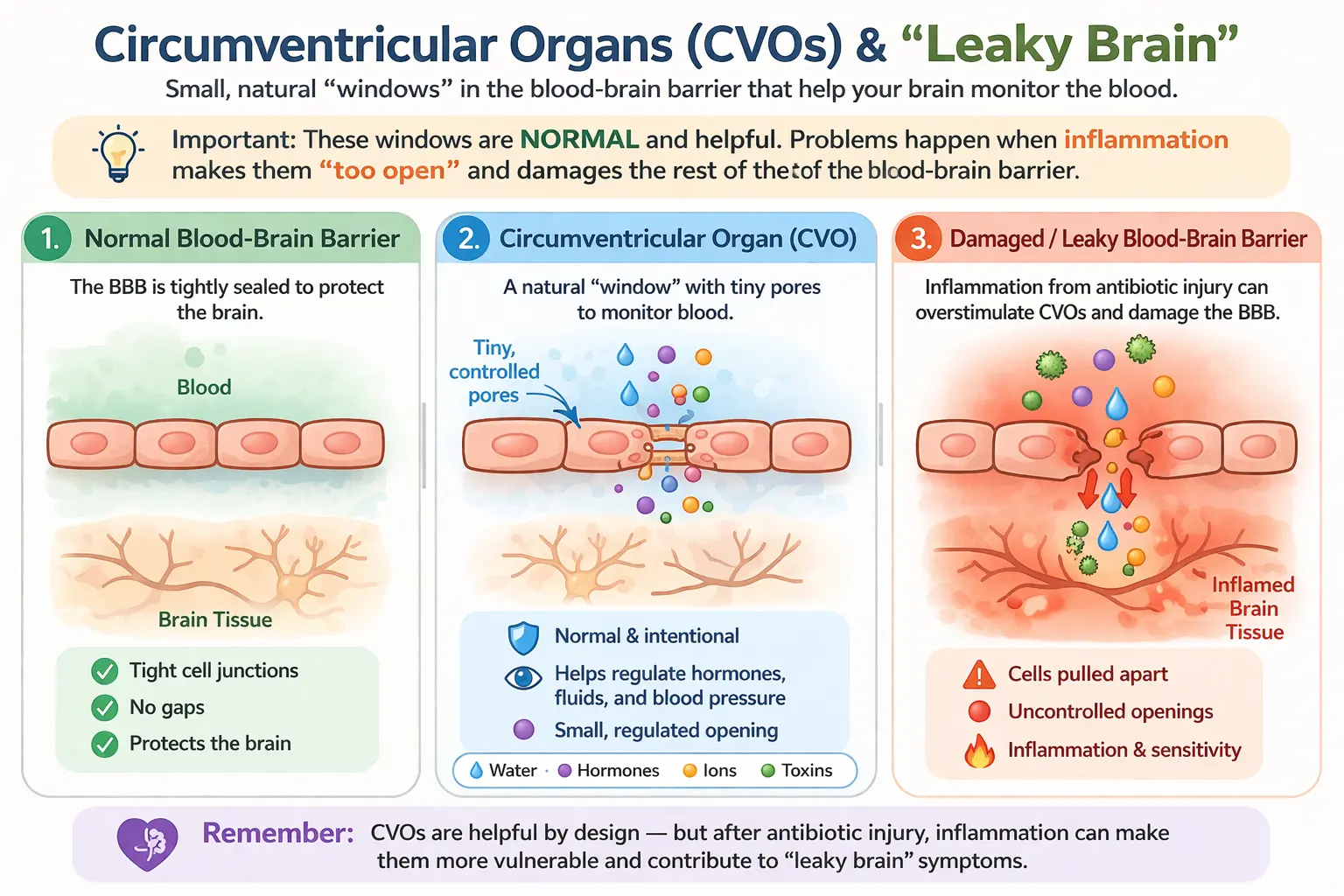
Floxed Patients May Have Blood-Brain Barrier Damage
The blood-brain barrier is the brain’s shield. Its job is to keep harmful things out while letting the right things in.
The webinar teaches that when this barrier gets damaged, unwanted things may pass through more easily. That can include inflammatory compounds and other triggers that irritate the brain.
This may help explain why some floxed patients feel:
• sensitive to light
• sensitive to sound
• easily overwhelmed
• mentally foggy
• emotionally unstable
• neurologically inflamed
If the shield is weak, the brain has less protection.
Floxed Patients May Also Have Leaky Gut and Leaky Brain
The webinar strongly connects leaky gut and leaky brain. The message is simple: if the gutbarrier is damaged, the brain barrier may also be more vulnerable.
That matters because many people who are floxed already notice gut symptoms like:
• bloating
• constipation
• diarrhea
• gas
• food reactions
Then after taking the drug, the symptoms become much worse.
Now the person is not just dealing with a gut issue. They may also be dealing with more inflammation reaching the brain.
This is one reason symptoms can spread from the gut to the nervous system.
Cipro Side Effects Can Include Serious Brain and Nervous System Symptoms
Many people think of Cipro side effects as simple stomach upset or a rash.
But the webinar paints a much bigger picture.
It explains that Cipro side effects may include major neurological and autonomic symptoms, especially when the drug reaches deep tissue and triggers inflammation.
These symptoms may include:
• heart racing
• panic attacks
• blurred vision
• brain fog
• anxiety
• temperature swings
• nerve symptoms
• strange sensations
• sleep problems
• dysautonomia
For many people, these do not feel like “normal” antibiotic side effects. They feel much more severe.
Cipro Side Effects May Affect the Autonomic Nervous System
The autonomic nervous system controls things your body does automatically, such as:
• heart rate
• blood pressure
• temperature
• digestion
• breathing patterns
The webinar links fluoroquinolone injury to damage in deeper brain areas that help regulate these
functions.
That may help explain why some people have:
• fast heart rate
• shaky feelings
• panic-like episodes
• blood pressure swings
• heat intolerance
• cold intolerance
• digestive chaos
When this system is irritated, the body can feel out of control.
Cipro Side Effects May Include Brain Fog and Vision Changes
Brain fog is one of the most common complaints in people who feel floxed. The webinar connects it to neuroinflammation, blood-brain barrier damage, and deeper tissue penetration.
Some people also report:
• blurry vision
• trouble focusing
• poor tracking with the eyes
• sensory overload
• feeling disconnected
The webinar explains that deeper brain areas involved in sensation, vision, hearing, and motion may be affected.
That is why these symptoms can feel so odd and so hard to explain.
Cipro Side Effects Are Different From Many Other Antibiotics
A major teaching point in the webinar is that not all antibiotics act the same.
The speaker compares fluoroquinolones with amoxicillin and explains that amoxicillin is more water soluble, while fluoroquinolones are more fat soluble.
That means amoxicillin is more likely to stay in the bloodstream and be cleared by the kidneys.
Fluoroquinolones, on the other hand, may move deeper into fatty tissue like the brain and nerves.
So even if two drugs are both called antibiotics, they may behave very differently inside the body.
Peripheral Neuropathy Is One of the Most Frightening Fluoroquinolone Problems
Peripheral neuropathy means damage or irritation to the nerves outside the brain and spinal cord.
These nerves run into the:
• arms
• hands
• legs
• feet
The webinar explains that fluoroquinolones may affect this nerve tissue too, not just the brain.
That is why many floxed patients report symptoms such as:
• tingling
• numbness
• burning pain
• shooting pain
• buzzing feelings
• weakness
• strange skin sensations
These symptoms can be very upsetting and may interfere with walking, sleeping, and daily life.
Peripheral Neuropathy May Happen Because Nerve Tissue Is Vulnerable
Nerve tissue is part of the larger neurological system. The webinar explains that this tissue may be vulnerable because these drugs can move into deeper fatty tissues.
When nerves become irritated, symptoms may show up in many ways:
• pain
• tingling
• electrical feelings
• sensitivity
• burning
• weakness
Some people feel this in one place. Others feel it all over.
This helps explain why peripheral neuropathy after a fluoroquinolone can feel so severe and so hard to calm down.
Peripheral Neuropathy May Be Worse When Mitochondria Are Stressed
Nerves need a lot of energy to work well.
That is why mitochondrial stress may make peripheral neuropathy worse. If the energy system is struggling, nerves may not heal or function as well as they should.
This may help explain why some people feel:
• weak and shaky
• tired and inflamed
• sensitive to small triggers
• slow to recover
When low energy and nerve irritation happen together, symptoms can last longer and feel more intense.
Fluoroquinolone Recovery Starts With Understanding the Mechanism
Fluoroquinolone recovery is not just about suppressing symptoms.
The webinar teaches that recovery starts by understanding the damage pattern. That pattern may
include:
• fat tissue penetration
• mitochondrial stress
• blood-brain barrier damage
• leaky gut
• leaky brain
• neuroinflammation
• nerve irritation
When a person sees the pattern more clearly, the symptoms make more sense.
That matters because confused people often chase random solutions. But when you understand the mechanism, you can think in a more organized way about what the body may need.
Fluoroquinolone Recovery Requires Root-Cause Thinking
The webinar pushes a root-cause message.
Instead of looking at one symptom at a time, it encourages people to think about the whole system:
• brain
• gut
• nerves
• mitochondria
• inflammation
• autonomic nervous system
That is important because many floxed patients do not have just one problem. They have a chain reaction.
The gut may be irritated.
The brain may be inflamed.
The nerves may be stressed.
The energy system may be struggling.
A root-cause view helps connect those dots.
Fluoroquinolone Recovery May Depend on How Healthy the Body Was Before
The webinar also explains that some people may be more vulnerable before they ever take the
drug.
For example, a person who already had:
• constipation
• bloating
• food issues
• poor gut health
• brain fog
• low resilience
may already have some barrier stress.
Then they take a fluoroquinolone, and the system gets pushed over the edge.
This may be one reason why one person feels fine after a drug, while another person crashes hard.
Fluoroquinolone Recovery Must Begin With Hope
One of the strongest messages in the webinar is this:
People should not give up.
The speaker says that once people understand what may be happening, they can start taking
better steps toward recovery.
That message matters.
When people are floxed, they often feel isolated. They may feel like nobody understands. They
may feel like they will never get better.
But understanding the mechanism can bring hope.
And hope matters, because recovery is hard when a person feels lost.
Why Floxed Patients Need Better Answers
Too many people with fluoroquinolone toxicity get told that their symptoms are stress, anxiety,
or bad luck.
But the webinar lays out a different view.
It explains that these symptoms may come from a real pattern involving:
• deep tissue penetration
• mitochondrial injury
• fluorine chemistry
• blood-brain barrier damage
• neuroinflammation
• peripheral neuropathy
• autonomic dysfunction
When this pattern is ignored, people stay confused.
When this pattern is understood, people can finally start asking better questions.
That is often the first step toward real healing.
Final Thoughts on Fluoroquinolone Toxicity, Floxed Symptoms, Cipro Side Effects, Peripheral Neuropathy, and Fluoroquinolone Recovery
Let’s keep this simple.
According to the webinar, fluoroquinolones may be especially harmful because they combine three major problems:
Fluoroquinolone Toxicity Involves Deep Tissue Penetration
These drugs may move into fat-rich tissue like the brain and nerves more easily than many other antibiotics.
Floxed Patients May Suffer From Mitochondrial Stress
Because these drugs target bacterial DNA, they may also stress the body’s mitochondria, which help make energy.
Cipro Side Effects and Peripheral Neuropathy May Be Driven by Neuroinflammation
The webinar links many severe symptoms to neuroinflammation, leaky brain, and damage to protective barriers in the body.
Fluoroquinolone Recovery Begins With Understanding and Action
People need clarity, not confusion. They need a plan that looks at the brain, nerves, gut, mitochondria, and inflammation together. That is the path this webinar points toward.
Fluoroquinolone Antibiotics & The Leaky Brain Link You Weren’t Told : FAQ
Fluoroquinolones are "grease-seeking" or lipophilic (fat-soluble) drugs. This means they easily penetrate the BBB (Blood-Brain Barrier) and the CNS (Central Nervous System), which are composed primarily of fatty tissue. Once inside, they can disrupt the DNA (Deoxyribonucleic Acid) and cellular function of your nerves.
Patients often experience a cluster of symptoms known as "Floxing," including TBI (Traumatic Brain Injury)-like brain fog, blurred vision, and severe ANS (Autonomic Nervous System) dysfunction. This typically manifests as heart racing, "heart anxiety," and panic attacks that feel systemic rather than emotional.
Yes. Because these antibiotics specifically target and damage the DNA (Deoxyribonucleic Acid) within neurological tissues, they can trigger long-term ANS (Autonomic Nervous System) dysregulation, leading to dysautonomia. This is why a Root Cause approach is necessary for Functional Recovery.
"Leaky brain" refers to a compromised BBB (Blood-Brain Barrier). When this barrier is damaged by fluoroquinolones, toxins and the drugs themselves can enter the brain tissue more easily, fueling chronic neuroinflammation and persistent neurological problems.
Your peripheral nerves—the ones in your arms and legs—are high-density fatty tissues. Since fluoroquinolones are lipophilic, they "slip" into these nerves like grease, causing direct toxicity and resulting in the nerve pain and tingling common in antibiotic-associated disability.
The root cause is often not a psychological issue but a biological one. Fluoroquinolones affect the CNS (Central Nervous System) and can disrupt neurotransmitter balance, triggering a systemic "fight or flight" response in the ANS (Autonomic Nervous System).
Yes. A primary property of this class of antibiotics is that they specifically target DNA (Deoxyribonucleic Acid). While intended to kill bacteria, this mechanism can also impact human cellular and mitochondrial DNA, leading to systemic health issues.
Yes. Once you understand the Data-drivenpharmacokinetics of how these drugs affected your body, you can begin a targeted Functional Recovery protocol. The goal is to address the systemic damage and support the body's natural repair mechanisms.
According to clinical analysis, the three key properties are:
1. High Tissue Penetration: They are lipophilic (fat-loving) and easily enter fatty neurological tissues.
2. BBB (Blood-Brain Barrier) Crossing: They easily penetrate the brain.
3. DNA Targeting: They specifically target and can damage cellular DNA (Deoxyribonucleic Acid).
Recovery starts with a thorough GI-MAP (Gastrointestinal Microbial Assay Plus) and systemic health assessment to identify the extent of the damage. By identifying the Root Cause of your neuroinflammation and gut dysbiosis, we can build a protocol focused on cellular repair.